TRUEFRAME™ JOIST
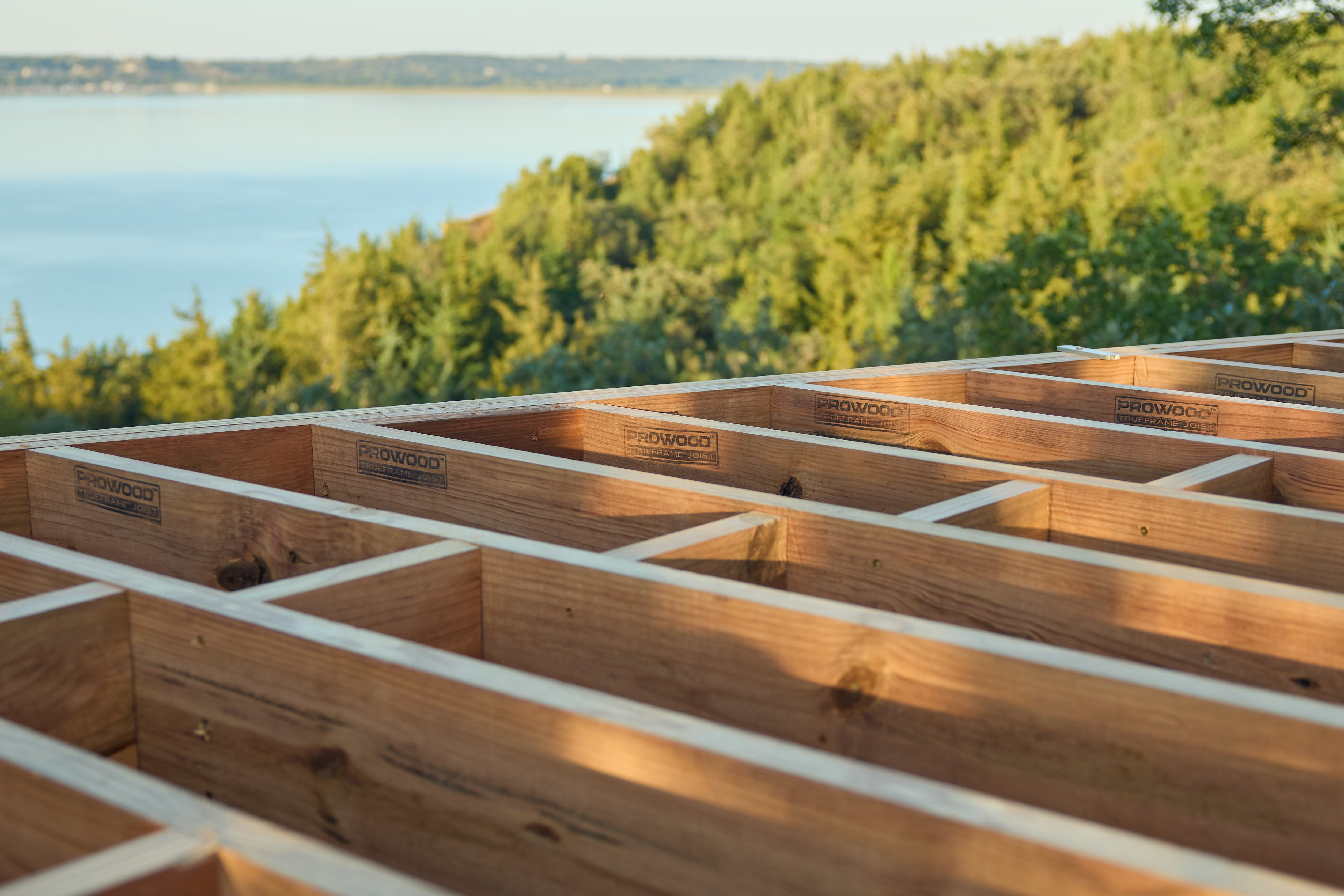
TrueFrame Joist is pressure-treated KDAT #1 Grade SYP, factory-planed for consistent sizing. Lighter and more affordable than alternative framing options, it's simple to handle, installs faster, and delivers professional results every time.
Trueframe Joist
Built for Pros
TrueFrame means you build better, every time.
UC4A
Treated to meet UC4A Ground Contact standards, ensuring unmatched durability and long-term performance where it matters most.


ProWood KDAT
Kiln-dried after treatment, making boards lighter, easier to transport, handle, and cut, saving contractors time on the job.
Enhanced Treatment
Features MCA preservative with a proprietary additive designed to deliver greater stability—keeping boards straighter for longer.

Factory Planed
Factory planed for consistent sizing and flat edges. Saving you time on the jobsite.
Built for Better Results
Better grading, straighter boards, and predictable sizing for professional-grade results.
Consistent Sizing
Spend less time sorting, organizing, and planing joists on-site
#1 Grade
Better looking lumber with stronger, longer spans
Get to know TrueFrame Joist
Specifications
| Actual Size | Max Span | Lengths | |
|---|---|---|---|
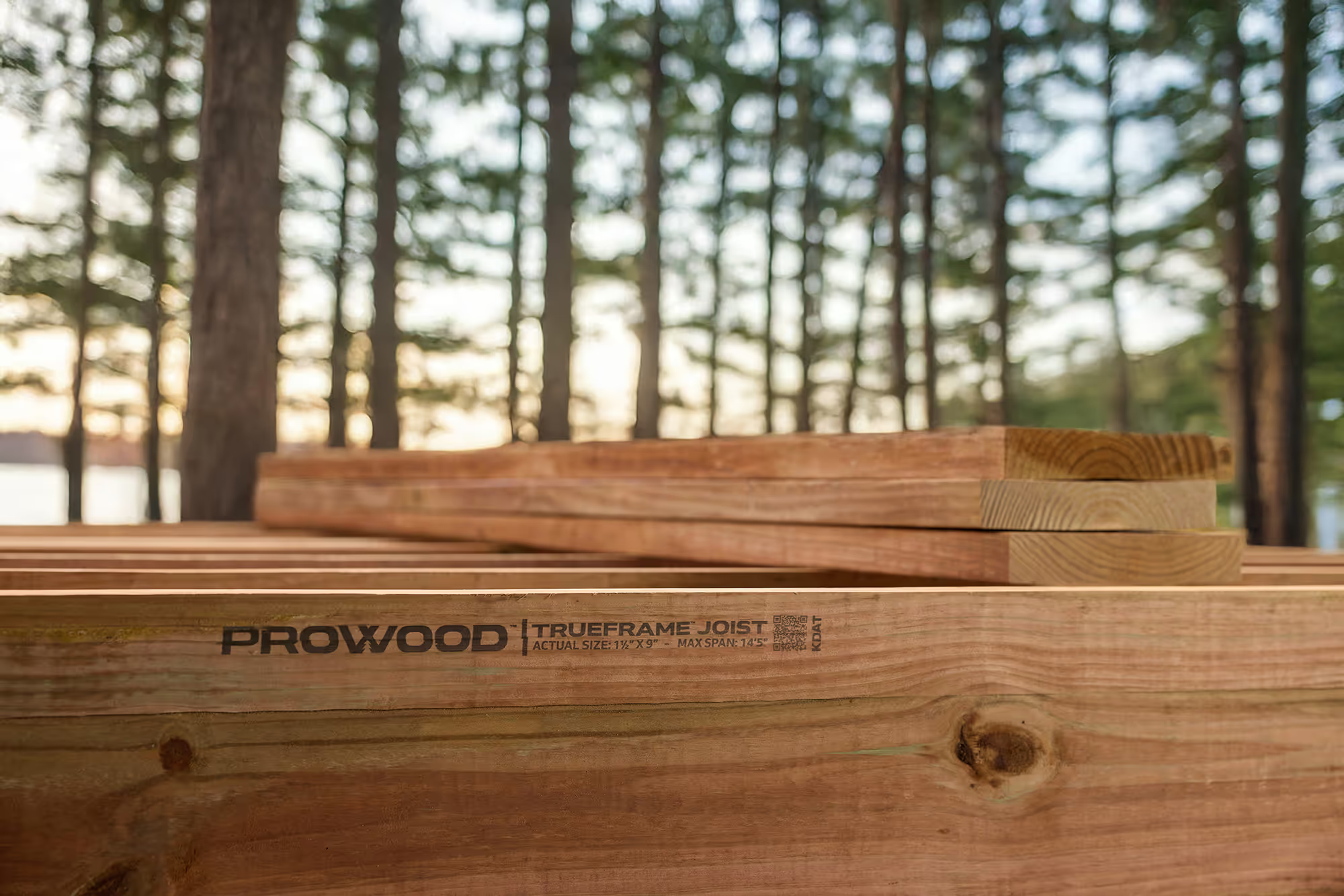
| 2x8 | 1 1/2" x 7" | 13’-1” | 12, 14, 16, 20 |
| 2x10 | 1 1/2" x 9" | 16’-10” | 12, 14, 16, 20 |
| 2x12 | 1 1/2" x 11" | 20’-7” | 12, 14, 16, 20 |
*All spans assume 12" joist spacing
Downloads

TrueFrame Joist Sell Sheet
TrueFrame Joist Beam Chart
Available in Select Markets
TrueFrame Dealers
TrueFrame Joist is rolling out to select markets throughout 2025-26. If you don't see a dealer near you, contact us below.
FAQ
Find answers to commonly asked questions
Refer to our FAQs to learn more about commonly asked questions regarding ProWood®, pressure-treated lumber, and more.
TrueFrame Joist is available at local building products dealers and lumberyards. You can find your local dealer using the dealer locator on our website.
Prices can vary by market, so check with your local dealer to get a quote.
Twisted pieces of TrueFrame Joist typically stem from improper handling or storage at some point before the bundle was opened. TrueFrame is made from wood and can bend, swell, shrink, or break based on the forces applied to it. It is critical to ensure even and consistent placement of pallet stickers.
TrueFrame Joist is backed by ProWood’s Lifetime Limited Warranty.
TrueFrame Joists are color-treated, offering a stained wood look without the work. If a client prefers a different color, you can stain or seal the joists immediately. Because it is KDAT, the boards are already dry and there is no need for additional waiting.
We recommend keeping TrueFrame Joists under the lumber wrap until it’s time to install. If possible, store full units under a covered shed or indoors.
Joist tape is highly recommended on all pressure-treated joists and TrueFrame Joist. Joist tape creates a waterproof membrane on top of deck joists, protecting the deck substructure from moisture, wood rot, and decay.
TrueFrame Joists are color-treated, meaning the wood is infused with a woodtone pigment during the pressure treatment process, driving color deep into the wood fibers. This results in a stained wood look without the work.
Yes, TrueFrame Joist is pressure-treated with MCA preservative to protect against rot, decay, and termites.
Our saw blades are placed in a way that trims to the actual width. However, crown and twist in the wood can cause skips or misses leading to the +/- 1/16” variation along the board. Boards can also arrive from the mill undersized and cause our saws to miss. We do our best to catch these in QC.
TrueFrame Joist features enhanced treatment, keeping boards straighter for longer and minimizing the wood defects. It is also KDAT to remove extra moisture, minimizing warping, shrinking and cracking. These two features allow TrueFrame to be more consistent and stable than a traditional pressure-treated joist. It is still wood, so it can shrink or swell based on ambient environmental conditions, but will have less variation than traditional pressure treated lumber.
TrueFrame Joist is factory-planed to be flat on both sides, consistent within 1/16" of the actual advertised width. By comparison, traditional treated lumber can vary within 1/2".
Yes. Because TrueFrame Joists are KDAT (kiln-dried after treatment), they are lighter than traditional pressure treated joists. Kiln-drying after treatment removes most of the excess moisture. Less moisture means less weight, making it easier to transport, cut, and install.
TrueFrame™ Joist is a #1 grade Southern Yellow Pine wood joist product. It’s pressure-treated, KDAT, and factory-planed for consistent sizing. Lighter and more affordable than alternative framing options, it’s simple to handle, installs faster, and delivers professional results every time.
Yes, treating cut ends with a copper-based preservative is required by IRC.
TrueFrame Joist is installed like traditional wood framing. Joist spacing and allowable spans are determined by the specific application, loads, and local building requirements. Because TrueFrame Joist has different dimensions than standard dimensional lumber, we provide span tables for quick reference. Always consult a design professional or engineer for project-specific span calculations.
TrueFrame Joist is available in the following actual sizes:
- 1-½ in. x 7 in. – 12 ft, 14 ft, 16 ft, and 20 ft lengths
- 1-½ in. x 9 in. – 12 ft, 14 ft, 16 ft, and 20 ft lengths
- 1-½ in. x 11 in. – 12 ft, 14 ft, 16 ft, and 20 ft lengths
Interested in TrueFrame Joist?
Fill out the form below for more information and to be notified when TrueFrame Joist is available in your region.